




TLDR
- Stablecoins lure retail deposits, eroding banks’ low-cost, sticky funding base.
- Banks replace deposits with costlier wholesale funding, constraining loan supply and credit.
- USD-backed tokens’ widespread euro-area use accelerates disintermediation and increases systemic fragility.
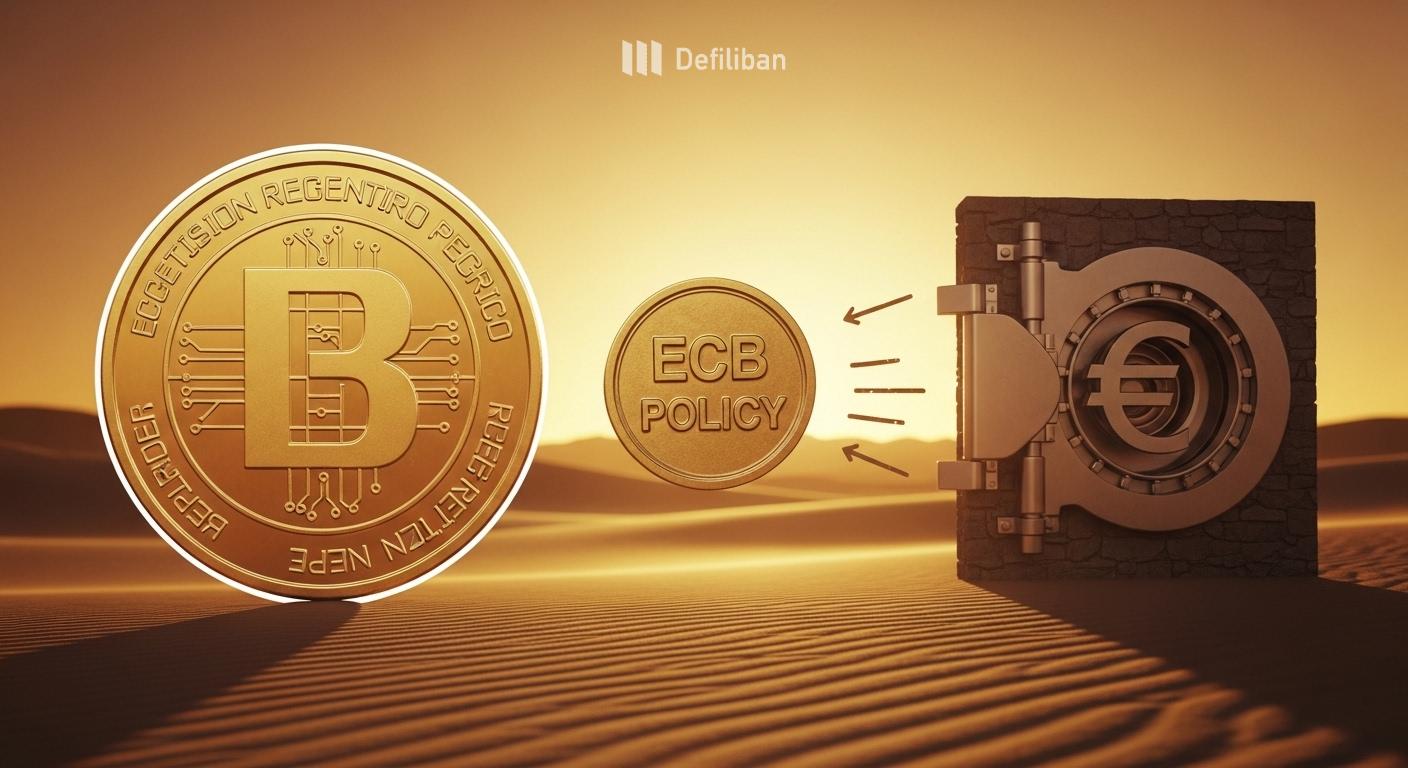
As reported by Bloomberg, an ECB study warns that widespread stablecoin use could pose major risks to euro-area banks and the central bank’s monetary sovereignty. The ECB stablecoin warning centers on lending capacity and policy control. The mechanism begins with deposits migrating to tokens.
When retail deposits move into stablecoins, banks lose low-cost, sticky funding. As reported by Delano.lu, that shift can push lenders toward costlier wholesale funding and strain loan supply. Funding transitions may raise fragility in stress.
Under the EU’s MiCA framework, e-money tokens and asset-referenced tokens face reserve and conduct rules. Yet widespread use of USD-backed tokens in the euro area may intensify bank disintermediation. The risk grows if users hold stablecoins for payments and savings rather than bank accounts.
Why this matters for ECB monetary policy transmission
According to Meyka.com, rapid stablecoin growth could undermine central bank influence over liquidity and prices. If euro-area payments shift into tokens, rate changes may transmit less predictably. That could complicate monetary policy transmission and price stability goals.
There is also a currency dimension. Jürgen Schaaf, an adviser at the European Central Bank, warned via Yahoo Finance that extensive use of U.S. dollar stablecoins in the euro area risks digital dollarization, eroding monetary sovereignty. That would weaken the link between ECB policy rates and domestic financial conditions.
Regulators are adjusting the toolkit. As reported by CoinDesk, ECB President Christine Lagarde has called for firm safeguards on foreign stablecoins unless they meet EU‑equivalent standards under MiCA, citing financial stability concerns. Implementation details could include liquidity, reserve quality, and usage limits consistent with MiCA.
The institutional message has been consistent: the concern is not crypto prices, but the plumbing of funding and policy control. “The European Central Bank warn that Stablecoins weaken bank lending and monetary policy in Europe.” , European Central Bank
Risks highlighted: bank deposit outflows and disintermediation
The near-term risk channel is deposit outflows. As reported by Fine Day Radio, an ECB study highlights that expanding stablecoin use could drain bank deposits and reduce lending capacity. That dynamic amplifies disintermediation pressures.
In stress, rapid redemptions could force issuers to sell reserve assets, transmitting strains into money and bond markets. Even without a run, persistent outflows can lift banks’ funding costs and compress credit supply.
At the time of this writing, Coinbase Global, Inc. (COIN) traded at 175.12, down 3.28% intraday, based on delayed market data provided. This market color does not alter the policy analysis above.
| Disclaimer: The content on defiliban.com is provided for informational purposes only and should not be considered financial or investment advice. Cryptocurrency investments carry inherent risks. Please consult a qualified financial advisor before making any investment decisions. |


