



TLDR
- Supreme Court curtailed IEEPA use for sweeping, peacetime across-the-board tariffs.
- No automatic refunds; recovery hinges on subsequent litigation and administrative processes.
- Eligibility, harm, and amounts determined through follow-on cases and agency procedures.
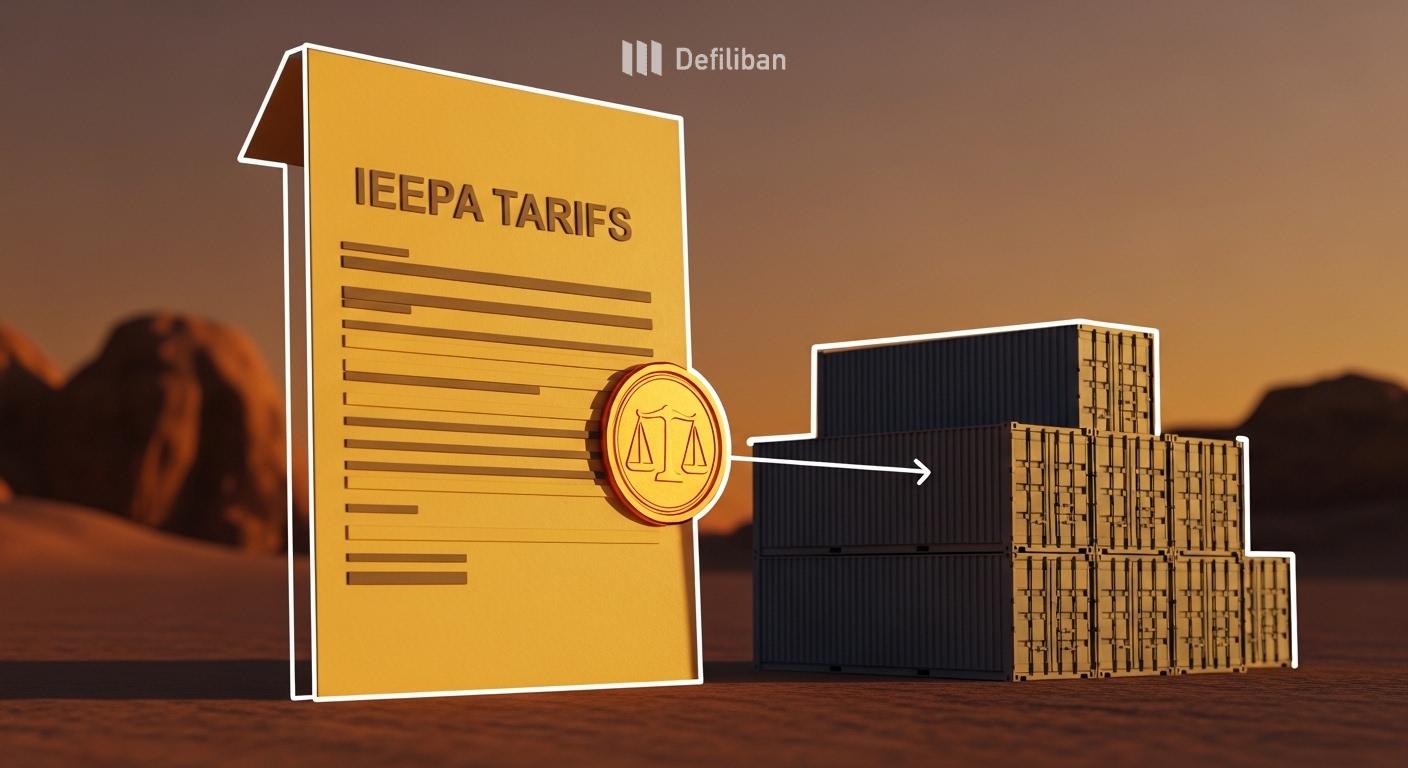
The U.S. Supreme Court’s decision in Learning Resources, Inc. v. Trump curtailed use of the International Emergency Economic Powers Act (IEEPA) to impose sweeping, across‑the‑board tariffs. The ruling limits executive authority for broad, peacetime duties and left key remedial questions to subsequent litigation and administration.
Crucially, the Court did not order automatic refunds of IEEPA tariffs. Any recovery will depend on follow‑on cases, eligibility standards, and agency procedures that determine who paid, who was harmed, and what amounts are due.
Illinois $8.6 billion refund demand: who’s eligible and why
Illinois Governor J.B. Pritzker sent an invoice to former President Donald Trump seeking $8.6 billion in refunds for Illinoisans following the ruling, according to CBS News Chicago. The demand frames Illinois $8.6 billion refund as money households paid indirectly through higher prices while the unlawful tariffs were in effect.
Axios reported that the request equates to about $1,700 per Illinois family. The figure is presented as a household‑level estimate rather than a court‑approved award, and it would still require legal and administrative action to materialize.
Illinois Attorney General Kwame Raoul participated in a multistate challenge to the tariffs, arguing they were imposed without congressional authorization and harmed state economies, according to the Illinois Attorney General’s office. That posture aligns with the Court’s separation‑of‑powers framework even as questions about refunds remain unresolved.
Chief Justice John Roberts wrote that allowing a president to impose “unbounded tariffs … on any product, from any country … for any amount of time” under IEEPA would be a “transformative expansion” of executive power. The opinion underscores Congress’s primacy over taxes and tariffs in peacetime.
Refund mechanics: importers versus consumers, documentation, and timing
As reported by Forbes, the decision did not itself mandate repayments; lower courts must determine who may claim refunds, under what theories, and for which periods. That process could take time and may vary across cases and claimants.
Refunds typically flow to the parties that remitted duties, meaning importers and affected companies are more likely initial recipients than households. The We Pay the Tariffs business coalition has urged full, fast, and automatic refunds for companies that paid invalidated duties, as reported by Newsweek.
Documentation will matter. Kevin Hassett, then Director of the National Economic Council, warned that tracking payments and distributing refunds could be a major administrative problem, according to the Los Angeles Times. Complex supply chains and pass‑through pricing also mean consumers bore costs even though firms wrote the checks, as noted by trade experts such as Scott Lincicome of the Cato Institute.
At the time of this writing, U.S. stocks were higher, with the S&P 500 at 6,909.51, up 0.69%, after headlines tied to the tariffs ruling, according to Reuters. Market moves offer context, not a prediction of refund outcomes or timing.
| Disclaimer: The content on defiliban.com is provided for informational purposes only and should not be considered financial or investment advice. Cryptocurrency investments carry inherent risks. Please consult a qualified financial advisor before making any investment decisions. |