


Digital asset investment products recorded just $230 million in net inflows last week, a sharp deceleration from the stronger institutional demand seen in prior weeks. The slowdown came as the Federal Reserve held interest rates steady while signaling fewer rate cuts ahead, a combination that cooled risk appetite across crypto markets.
Weekly Digital Asset Fund Inflows
$230M
Week ending Mar 2026 — inflows slowed as the Fed held rates with a hawkish tone, dampening institutional demand for crypto investment products.
Source: CoinShares Digital Asset Fund Flows
TLDR Keypoints
- Weekly inflows of $230 million represent a notable pullback from recent weeks of stronger institutional buying into digital asset investment products.
- The Fed’s “hawkish pause” kept rates unchanged while signaling fewer cuts ahead, directly reducing incentive to allocate into risk assets like crypto.
- Inflows remain positive, meaning institutions are still net buyers of digital asset products, but the pace of accumulation has slowed considerably.
Digital Asset Fund Inflows Retreat to $230 Million Amid Cautious Market Mood
The $230 million in weekly net inflows marks a clear step down from the stronger flows that digital asset investment products, including spot Bitcoin ETFs, had attracted in earlier weeks. While the figure is still positive, it reflects a growing caution among institutional allocators.
Bitcoin-linked products have consistently dominated the share of weekly inflows into regulated crypto investment vehicles. The broader trend of institutional participation through ETFs and exchange-traded products has been a defining feature of the current market cycle, as Grayscale’s 2026 digital asset outlook characterized as the “dawn of the institutional era.”
Ethereum and multi-asset products contributed as secondary components, though Bitcoin funds continued to account for the largest share of capital moving into the space. The deceleration was broad-based, not limited to a single asset class.
Critically, the $230 million figure represents a slowdown, not a reversal. Net inflows remained positive, meaning more capital entered digital asset products than exited. This distinction matters: the market is cooling, not capitulating.
How the Fed’s Hawkish Pause Is Weighing on Crypto Investment Appetite
What “Hawkish Pause” Means
A hawkish pause occurs when a central bank holds interest rates steady but accompanies that decision with language or projections suggesting rates will stay elevated for longer than markets expected. The “pause” is the rate hold; the “hawkish” part is the forward guidance signaling fewer or slower cuts ahead.
In this case, the Federal Reserve kept its benchmark rate unchanged while its updated projections pointed to fewer rate reductions than investors had priced in. For risk assets, the signal was clear: the era of easy money is not arriving as quickly as hoped.
Impact on Crypto Allocation
Higher-for-longer interest rates reduce the relative attractiveness of risk assets, including cryptocurrencies and the investment products built around them. When Treasury yields remain elevated, institutional investors face less incentive to rotate capital into volatile asset classes.
This dynamic is especially relevant for regulated crypto products like ETFs and ETPs, where the buyer base skews institutional and rate-sensitive. These allocators respond directly to shifts in monetary policy expectations, as reporting on the Fed’s hawkish signals and their effect on digital asset funds has documented.
The weekly flow data from products like these serves as a bellwether for institutional sentiment. When inflows slow, it signals that large allocators are pausing to reassess, not necessarily exiting, but waiting for clearer conditions before adding exposure.
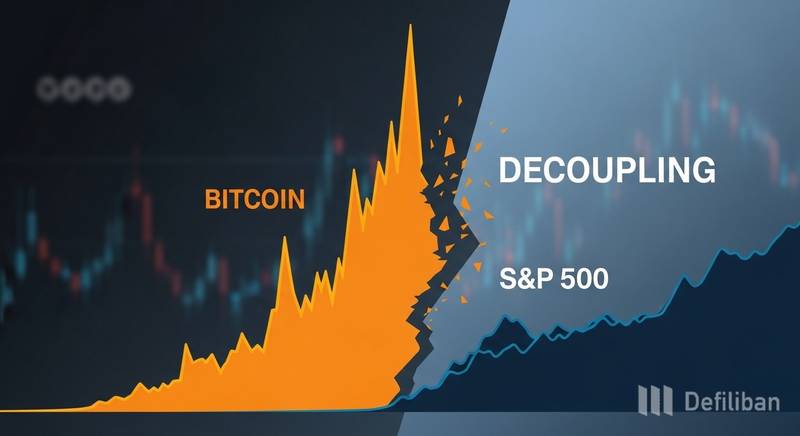
This pattern has played out before. Periods where Bitcoin has decoupled from traditional risk assets often coincide with macro uncertainty, as institutional and retail participants respond to different signals.
What Slowing Inflows Signal for Crypto Markets in the Near Term
Flow deceleration of this kind historically precedes sideways or mildly corrective price action rather than sharp selloffs. When institutional buyers slow their pace without turning into net sellers, it suggests a “wait and see” posture rather than a loss of conviction.
The next catalysts to watch are the upcoming Federal Reserve meeting and the next round of inflation data. Both will shape rate expectations and, by extension, institutional appetite for risk assets including crypto. A softer-than-expected CPI print or dovish shift in Fed language could re-accelerate inflows.
The fact that $230 million still flowed into digital asset products during a week of hawkish Fed messaging suggests underlying institutional demand remains intact. Long-term allocation trends toward crypto have not reversed; the pace has simply moderated in response to macro headwinds.
Leveraged positioning also warrants monitoring during periods of reduced institutional flow. As one recent example showed, a whale who opened a $19 million leveraged BTC long was liquidated within an hour, illustrating the risks of aggressive positioning when broader market conviction is softening.
For now, the $230 million weekly inflow figure tells a measured story: institutions are still buying, but they are buying more carefully. The Fed’s next move will likely determine whether that caution deepens or gives way to renewed momentum.
Disclaimer: This article is for informational purposes only and does not constitute financial or investment advice. Cryptocurrency and digital asset markets carry significant risk. Always do your own research before making decisions.