


TLDR
- Cardone Capital plans to tokenize approximately $5B of real estate holdings.
- Tokens will be blockchain-based securities recorded on a distributed ledger.
- Investors gain economic rights via SPVs/LLCs, not direct property title.
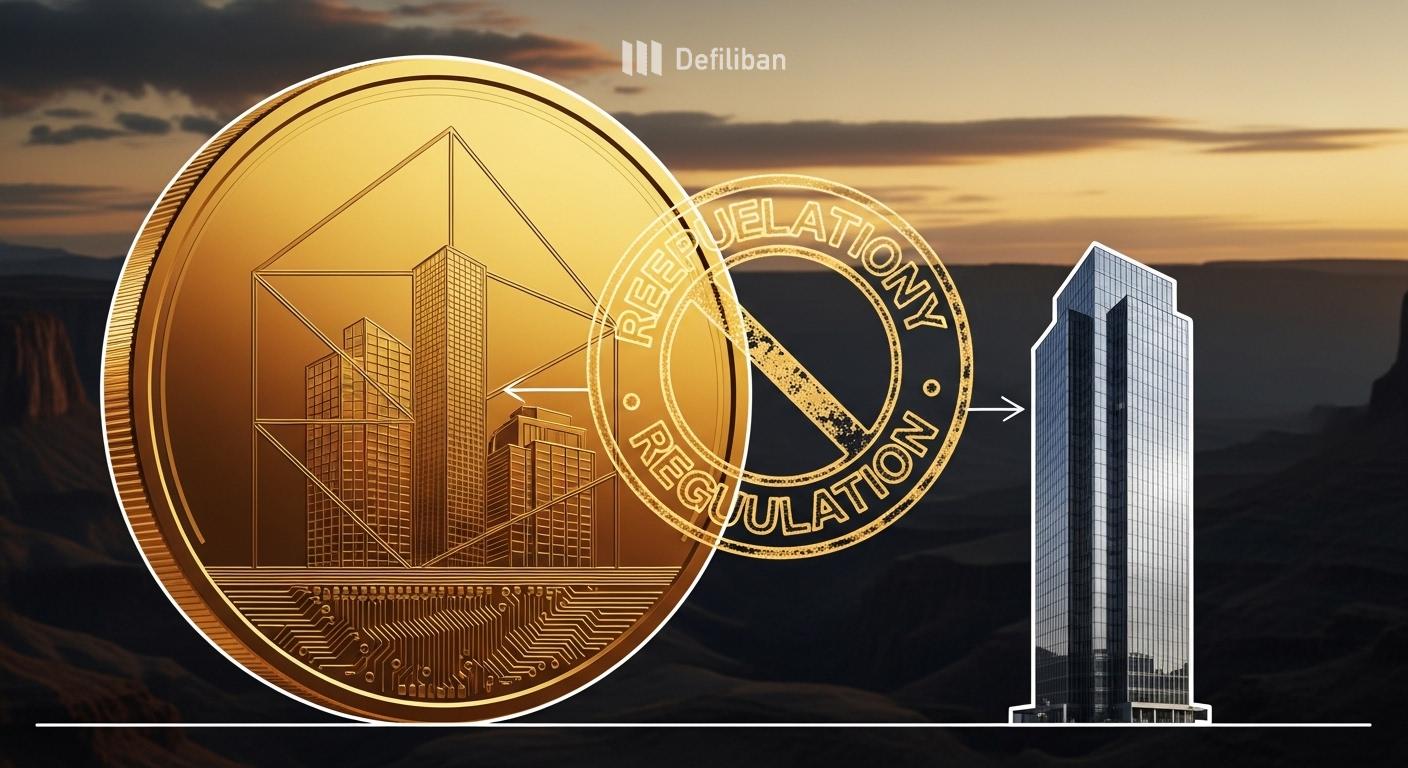
Billionaire Grant Cardone says Cardone Capital is preparing to tokenize its real estate holdings, roughly a $5 billion portfolio, as reported by CoinDesk. In practical terms, the firm would convert ownership interests into blockchain-based security tokens recorded on a distributed ledger.
In real estate tokenization, tokens typically grant economic rights in special-purpose entities (LLCs or SPVs) that own the properties, not direct deed ownership. Industry legal analyses such as Lofty.ai note state property laws generally do not recognize tokens as title, so investor rights flow through the entity structure rather than a land registry.
Immediate impact: access, compliance, and liquidity realities
Tokenization can lower investment minimums and broaden access via fractional interests. However, eligibility and disclosures will depend on how any offering is structured under U.S. securities law, whether via private placements under Reg D, offshore sales under Reg S, or potentially a qualified mini-public route like Reg A+.
Liquidity expectations should be conservative. Academic work highlighted on arXiv finds many tokenized assets exhibit thin trading and limited secondary market depth, while U.S. venues typically gate access via KYC procedures and transfer restrictions.
Regulatory bottlenecks are widely cited as the key near-term constraint. As reported by CoinEdition, Barry Sternlicht, chairman of Starwood Capital Group, said, “We’re ready to tokenize assets now, but U.S. regulatory ambiguity is preventing us and others from doing so.”
Investor eligibility, secondary markets, and KYC/AML expectations
Under the U.S. Securities and Exchange Commission framework, tokenized interests are generally treated as securities, triggering registration or exemption requirements, anti-fraud rules, and investor protections. Buyers should expect full KYC/AML, accreditation checks where applicable, and entity-level tax documentation consistent with the underlying SPV/LLC structure.
Secondary trading, if permitted, would likely occur on regulated alternative trading systems operated by broker-dealers, with on-chain whitelisting to enforce compliance. Tokens issued under Reg D often carry lockups and transfer restrictions, while Reg S placements may have separate distribution compliance windows for non-U.S. persons.
At the time of this writing, broader crypto market conditions remain volatile; Ethereum (ETH) traded near $2,033 with bearish sentiment, elevated volatility around 13.6%, and a neutral 14-day RSI near 44. This context may shape risk tolerance but does not determine outcomes for real estate tokenization.
| Disclaimer: The content on defiliban.com is provided for informational purposes only and should not be considered financial or investment advice. Cryptocurrency investments carry inherent risks. Please consult a qualified financial advisor before making any investment decisions. |